Ear Specula and Direct Otoscopy
Direct otoscopy is a fundamental diagnostic tool primarily used in the ear, nose, and throat (ENT) medicine, and it plays a crucial role in primary care, pediatrics, audiology, and emergency medicine. It allows healthcare professionals to visualize the ear canal and tympanic membrane.
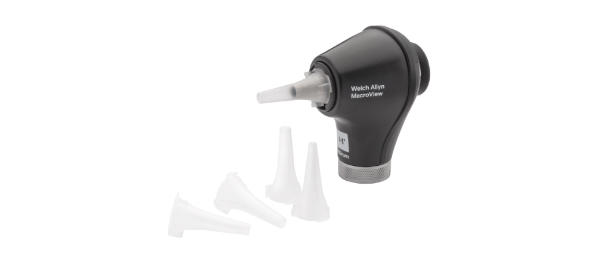
An ear speculum is a small, cone-shaped accessory that attaches to a direct otoscope, enabling clinicians to safely and effectively visualize the ear canal and tympanic membrane. It plays a critical role by gently opening the ear canal to provide a clear line of sight, which is essential for accurate diagnosis.
From the First Glimpse: The Speculum and Our Legacy in Otoscopy
Long before modern otoscopes, the ear speculum was the cornerstone of otoscopy. In 1841, Dr. Friedrich Hofmann, a medical officer in Germany, described a concave mirror with a central opening to direct light into the ear canal while allowing clear inspection of the eardrum. He also suggested its use for examining other hidden body areas. Though briefly mentioned in an 1845 otology textbook, the invention received little attention.1
In 1855 – 56, Dr. Anton von Tröltsch, a German otologist and ophthalmologist, advanced ear examination by inserting a funnel-shaped speculum into the ear canal and reflecting daylight with a concave mirror to visualize the tympanic membrane. He emphasized using natural light and later acknowledged Hofmann’s earlier work. Von Tröltsch played a key role in popularizing this tool for examining the ear, nose, and throat.1
The evolution continued when, in 1915, Dr. Francis Welch patented a hand-held, direct-illuminating ophthalmoscope. Partnering with engineer William Noah Allyn, they founded Welch Allyn in Auburn, NY. By 1920, their battery-powered otoscope debuted at the American Medical Association meeting, revolutionizing ear examination with portable illumination and interchangeable handles — transforming the speculum from a standalone tool into part of a sophisticated diagnostic system.2
Ear Specula: Nowadays
In current clinical practice, the funnel-shaped (conical) speculum and its pneumatic variant are the most widely used ear specula, valued for their compatibility with otoscopes and effectiveness in ear examination and diagnosis.
The ear specula are available in various sizes to accommodate different patient groups: typically, 4 mm or 5 mm for adults, 3 mm or 4 mm for children, and 2.5 mm or 3 mm for infants, ensuring optimal visualization and comfort during examination.
Additionally, ear specula come in both reusable and disposable forms. While reusable specula are designed for sterilization and repeated use, disposable specula offer the advantage of enhanced hygiene and convenience, reducing the risk of cross-contamination and eliminating the need for cleaning between patients — particularly beneficial in high-volume clinical settings.
Our Latest Advancement – The WELCH ALLYN LUMIVIEW Clear Ear Specula

Our LumiView Clear Single-Use Ear Specula provides a brighter, clearer exam field than what you see through a traditional black speculum, helping clinicians to examine and assess with confidence.3
- 4x light output for adult3
- 8x light output for pediatric3
- Minimize cross-contamination risk with a new speculum for every patient
The LumiView is Compatible with
Welch Allyn MacroView Plus,
MacroView Basic, 3.5 V Diagnostic and Pocket style otoscope.
"The LumiView is a game-changing enhancement. It can deliver a significantly brighter and clearer view, enabling physicians to see the true color and detail of ear canal tissues."
Orfhlaith O'Keeffe, Marketing Coordinator, Western Europe Physical Assessment Marketing, at Baxter.
Keep Exploring
For safe and proper use of the product mentioned herein, please refer to the appropriate Operator’s Manual or Instructions for Use.
This medical device is a regulated health product which, pursuant to such regulation, bears a CE mark. Baxter recommends that you carefully read the detailed instructions for safe and proper use included in the documents accompanying the medical devices.
The personnel of healthcare establishments are responsible for the proper use and maintenance of this medical device.